

Top Story | Exclusives / Features
OPEC+ Nudges Supply Higher: Why This Weekend’s Hike Echoes 2020—But Isn’t 2020
 Print
|
Print
|

Why this decision matters now
The choice to lift production, though modest in size, signals a gradual shift in strategy. For much of the past two years, OPEC+ has focused on price defense through voluntary restraint. By greenlighting incremental increases, the group is now edging toward reclaiming market share—doing so in a structured, predictable fashion rather than with shock moves.
Analysts expect additional tranches over the next year, which, if carried through, would restore a sizable portion of the 1.65 million barrels per day that were initially curtailed. That matters for executives setting budgets: it shapes forward price assumptions, alters balance-of-supply outlooks, and could influence project sanctioning timelines.
Looking back: when a production hike broke the market
Executives will recall the spring of 2020, when cooperation between Saudi Arabia and Russia fell apart. On March 8 of that year, Riyadh moved to raise volumes and discount exports, triggering a price war at precisely the moment COVID-19 was crushing global demand. The result was a near-instant collapse in crude benchmarks: Brent and WTI tumbled by almost a third in a single session, and within weeks U.S. storage constraints forced WTI futures into negative territory.
That episode was a toxic mix of oversupply, demand shock, and broken discipline inside the cartel. It demonstrated how quickly sentiment can flip from stability to crisis when market management fractures.
Why 2025 is not 2020
Several key differences explain why markets responded calmly this time:
-
Coordinated process, not rupture. The new increase is a collectively managed step, not a unilateral flood of barrels.
-
Demand environment. Consumption today is stable to improving, unlike the early-pandemic collapse.
-
Predictable signaling. OPEC+ has flagged its intention to gradually roll back cuts, and banks have already started to adjust outlooks accordingly.
For now, the narrative is one of controlled rebalancing, not a shock to the system.
Strategic implications for operators and investors
Price expectations
Base-case forecasts point to crude holding steady within recent ranges as the supply add is balanced by steady consumption and ongoing supply disruptions elsewhere. The risk comes if OPEC+ accelerates the pace while demand cools, which could reintroduce oversupply and weaken forward curves.
Shale and North America
U.S. independents are unlikely to chase volumes in response. Capital discipline remains the industry’s default setting, which means OPEC+ barrels are more likely to shape market balance than incremental shale growth.
Logistics and differentials
Extra Middle East crude into the Atlantic Basin could tighten light–heavy spreads and affect freight dynamics. U.S. refiners and traders will need to watch Brent–Dubai and regional differentials closely.
Hedging and balance sheet strategy
The 2020 collapse proved how storage and futures mechanics can create severe dislocations. Producers may want to review hedge programs into the Q4–Q1 shoulder months, layering protection against downside while preserving upside to stable-to-strong prices.
M&A environment
If OPEC+ continues easing cuts, asset valuations may reset, making proved developed producing (PDP) packages more attractive to buyers. Expect structured financing solutions—royalty deals, securitizations, and ABS—to remain important tools for acquisitions.
The takeaway
OPEC+ has started the process of loosening the reins on production. Unlike the chaos of 2020, the move is calculated, telegraphed, and unfolding against a healthier demand backdrop. But history offers a caution: stability can evaporate quickly if coordination slips or if supply overshoots consumption. For oil and gas leaders, the task now is to plan around a managed, but real, increase in supply—balancing discipline with readiness to seize opportunities in a shifting market.
More Exclusives / Features News

Why $90 Oil Isn’t Bringing Back the Rigs
Higher oil prices are not translating cleanly into a drilling response across U.S. shale, and company disclosures are starting to show why. The issue is not simply capital…

These Three Companies Will Increase Drilling & Completion Over The Next 3 Year
In the span of fifteen months, three Japanese energy companies committed more than $10.3 billion to U.S. natural gas production assets — a buying spree that has transferred…

Q1 A&D Transactions Jump to $30B , While Deal Flow Was Down 40%
The first quarter of 2026 has officially defined the "Barbell Era" of American oil and gas. While the total number of deals plummeted by 46% YoY (dropping to…

Venezuela: Rebuild Potential vs. Stop/Start Reality — What It Means for International OFS
Venezuela: Rebuild Potential vs. Stop/Start Reality — What It Means for International OFS According to Reuters, Venezuela’s oil sector remains a high-potential but fragile opportunity: it holds massive…

A Quiet Capital Pattern Is Forming in North American Upstream — and Almost No One Is Talking About It
A handful of recent transactions and capital raises point to a subtle pattern in North American upstream—one that is easy to miss because each event, on its own,…
Gulf Coast News
Why $90 Oil Isn’t Bringing Back the Rigs
Higher oil prices are not translating cleanly into a drilling response across U.S. shale, and company disclosures are starting to show why. The issue is not simply capital…
These Three Companies Will Increase Drilling & Completion Over The Next 3 Year
In the span of fifteen months, three Japanese energy companies committed more than $10.3 billion to U.S. natural gas production assets — a buying spree that has transferred…
Q1 A&D Transactions Jump to $30B , While Deal Flow Was Down 40%
The first quarter of 2026 has officially defined the "Barbell Era" of American oil and gas. While the total number of deals plummeted by 46% YoY (dropping to…

Wright to U.S. Oil Industry: The Price Signal Is Telling You to Drill
Energy Secretary Chris Wright stood in front of the largest gathering of oil executives in the world this morning and delivered a message that was equal parts market…

Apa Corp : Doing More With Less
APA's 2025 narrative was one of operational surprise. The company came in beating production guidance every single quarter while spending below plan, capturing over $300MM in cost savings…
Permian News
Permian Resources to Grow Production 6% in 2026
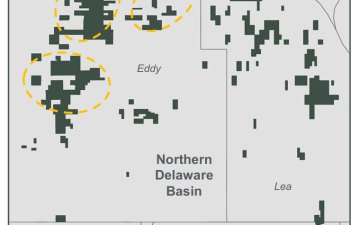
Permian Resources exited 2025 as the largest pure-play Delaware Basin operator with ~480,000 net acres and >105,000 net royalty acres. The company averaged 392.6 MBoe/d in 2025, including…

Battalion Oil Closes ~$60M West Quito Draw Asset Sale
Battalion Oil Corporation has closed the sale of its West Quito Draw assets in the Southern Delaware Basin to MCM Delaware Resources LLC, a subsidiary of MCM Energy…

Deal Rumor: ConocoPhillips Exploring $2B Permian Asset Sale
ConocoPhillips is reportedly exploring the potential sale of certain Permian Basin assets in a transaction valued at approximately $2 billion, according to Reuters, citing sources familiar with the…

An Eagle Ford Team That Cashed Out Is Back for Another Cycle
Houston — January 15, 2026 — Lime Rock Partners, a Houston-based private investment firm specializing in upstream oil and gas, has completed an equity commitment to Athena Energy…

Silver Hill Expands South Texas Footprint with Acquisition of 1776 Energy Assets
Silver Hill Energy Partners has acquired 100 percent of 1776 Energy’s South Texas oil and gas assets, significantly expanding its operated footprint across the Eagle Ford and Austin…