

 Print
Print 
Energy Secretary Chris Wright stood in front of the largest gathering of oil executives in the world this morning and delivered a message that was equal parts market economics and wartime urgency: the price spike is real, it is your invitation, and the administration wants you to act on it.
"Markets do what markets do," Wright said in a keynote conversation with energy historian Daniel Yergin at S&P Global's CERAWeek conference in Houston. "Prices went up to send signals to everyone that can produce more: 'Please, produce more.'"
The remarks came on the opening day of CERAWeek's 44th edition, a conference that had originally been designed around artificial intelligence and the energy transition. The Iran war made that agenda obsolete before a single panel began.
What Wright Said — and What He Didn't
Wright's message was deliberately calibrated. He called the disruption "short-term" and framed the conflict as a necessary reckoning rather than an avoidable crisis, saying it represented "short-term disruption now, but to end a multi-decadal problem." He said prices have not yet risen high enough to drive meaningful demand destruction, a signal that the administration does not believe the economic pain has peaked.
On emergency supply, Wright was specific. The U.S. began withdrawing oil from the Strategic Petroleum Reserve on March 20 and will release between 1 million and 1.5 million barrels per day from U.S. stocks, with the total global IEA release potentially approaching 3 million barrels per day. That follows the earlier commitment of 172 million barrels as part of a 32-nation emergency release agreed March 11. He said the administration will not restrict U.S. crude or LNG exports to lower domestic prices, a direct signal to E&P companies that their export markets remain open.
The Ask Is Real, But So Is the Hesitation
The request to produce more is not coming with a blank check. American oil companies have not yet announced major plans to increase production, according to E&E News reporting from the conference floor. Producers are skeptical. Market chaos has made many unwilling to commit capital to wells that could become unprofitable if a ceasefire materializes faster than a new well comes online.
That tension was visible on stage. Chevron CEO Mike Wirth, speaking at the same conference, said the physical consequences of the Hormuz closure are not fully priced into markets yet. "Physical supply changes don't respond immediately," Wirth said. "Even when the strait reopens at some point, it will take time." He described fundamentals as "very tight" and accused Iran of "choking the throat" of the global economy.
A Conference Missing Its Biggest Names
The geopolitical weight of the moment was underscored by who was not in the room. Saudi Aramco CEO Amin Nasser withdrew entirely, with no video message. ADNOC CEO Sultan Al Jaber participated virtually before traveling to Washington for emergency Hormuz discussions. Kuwait Petroleum's CEO joined by video link from Kuwait City. The Gulf's most powerful oil executives are managing an existential infrastructure crisis from their home capitals. Their facilities have been struck, their export routes severed, and they were not consulted before the war that caused it.
Dan Yergin framed the moment plainly at the conference open. "There has been more upheaval and disruption in markets than ever before. This is a war that's been brewing for almost half a century, and the concerns about the Gulf have been prominent for half a century. But now it's happening."
What It Means for You
The administration's position is now unambiguous. It wants U.S. producers to fill the gap, it will not penalize exports, and it is releasing strategic reserves to buy time for the market to respond. Wright is not offering production incentives, tax relief, or permitting fast-tracks in this speech. He is pointing at $100 oil and asking the industry to do what it has always done when prices justify it.
The practical constraint is duration. If the Hormuz closure persists another month at current flow levels, Goldman Sachs has warned Brent could approach its 2008 record near $147. That scenario makes a drilling surge economically compelling. If Trump's five-day ceasefire window produces a genuine resolution and oil retraces to the $70s, wells permitted this week become a liability.
Wright's bet, and the administration's, is that the conflict is short enough that the supply gap matters more than the price risk. Whether U.S. E&P executives share that conviction is the question CERAWeek will spend the rest of this week trying to answer.
More Exclusives / Features News

Why $90 Oil Isn’t Bringing Back the Rigs
Higher oil prices are not translating cleanly into a drilling response across U.S. shale, and company disclosures are starting to show why. The issue is not simply capital…

These Three Companies Will Increase Drilling & Completion Over The Next 3 Year
In the span of fifteen months, three Japanese energy companies committed more than $10.3 billion to U.S. natural gas production assets — a buying spree that has transferred…

Q1 A&D Transactions Jump to $30B , While Deal Flow Was Down 40%
The first quarter of 2026 has officially defined the "Barbell Era" of American oil and gas. While the total number of deals plummeted by 46% YoY (dropping to…

Venezuela: Rebuild Potential vs. Stop/Start Reality — What It Means for International OFS
Venezuela: Rebuild Potential vs. Stop/Start Reality — What It Means for International OFS According to Reuters, Venezuela’s oil sector remains a high-potential but fragile opportunity: it holds massive…

A Quiet Capital Pattern Is Forming in North American Upstream — and Almost No One Is Talking About It
A handful of recent transactions and capital raises point to a subtle pattern in North American upstream—one that is easy to miss because each event, on its own,…
Gulf Coast News
Why $90 Oil Isn’t Bringing Back the Rigs
Higher oil prices are not translating cleanly into a drilling response across U.S. shale, and company disclosures are starting to show why. The issue is not simply capital…
These Three Companies Will Increase Drilling & Completion Over The Next 3 Year
In the span of fifteen months, three Japanese energy companies committed more than $10.3 billion to U.S. natural gas production assets — a buying spree that has transferred…
Q1 A&D Transactions Jump to $30B , While Deal Flow Was Down 40%
The first quarter of 2026 has officially defined the "Barbell Era" of American oil and gas. While the total number of deals plummeted by 46% YoY (dropping to…

Apa Corp : Doing More With Less
APA's 2025 narrative was one of operational surprise. The company came in beating production guidance every single quarter while spending below plan, capturing over $300MM in cost savings…
Permian Resources to Grow Production 6% in 2026
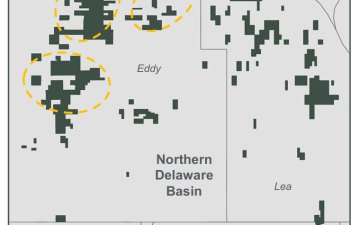
Permian Resources exited 2025 as the largest pure-play Delaware Basin operator with ~480,000 net acres and >105,000 net royalty acres. The company averaged 392.6 MBoe/d in 2025, including…
Permian News

Battalion Oil Closes ~$60M West Quito Draw Asset Sale
Battalion Oil Corporation has closed the sale of its West Quito Draw assets in the Southern Delaware Basin to MCM Delaware Resources LLC, a subsidiary of MCM Energy…

Deal Rumor: ConocoPhillips Exploring $2B Permian Asset Sale
ConocoPhillips is reportedly exploring the potential sale of certain Permian Basin assets in a transaction valued at approximately $2 billion, according to Reuters, citing sources familiar with the…

An Eagle Ford Team That Cashed Out Is Back for Another Cycle
Houston — January 15, 2026 — Lime Rock Partners, a Houston-based private investment firm specializing in upstream oil and gas, has completed an equity commitment to Athena Energy…

Silver Hill Expands South Texas Footprint with Acquisition of 1776 Energy Assets
Silver Hill Energy Partners has acquired 100 percent of 1776 Energy’s South Texas oil and gas assets, significantly expanding its operated footprint across the Eagle Ford and Austin…

This Operator Will Chop it's 2026 Rig Count From 34 to 24
ConocoPhillips is setting up 2026 as a lower-intensity, more efficient operating year — with the clearest proof coming from the Lower 48 activity reset following the Marathon integration.…